Faith, suffering, and the memory of our family
My father’s story
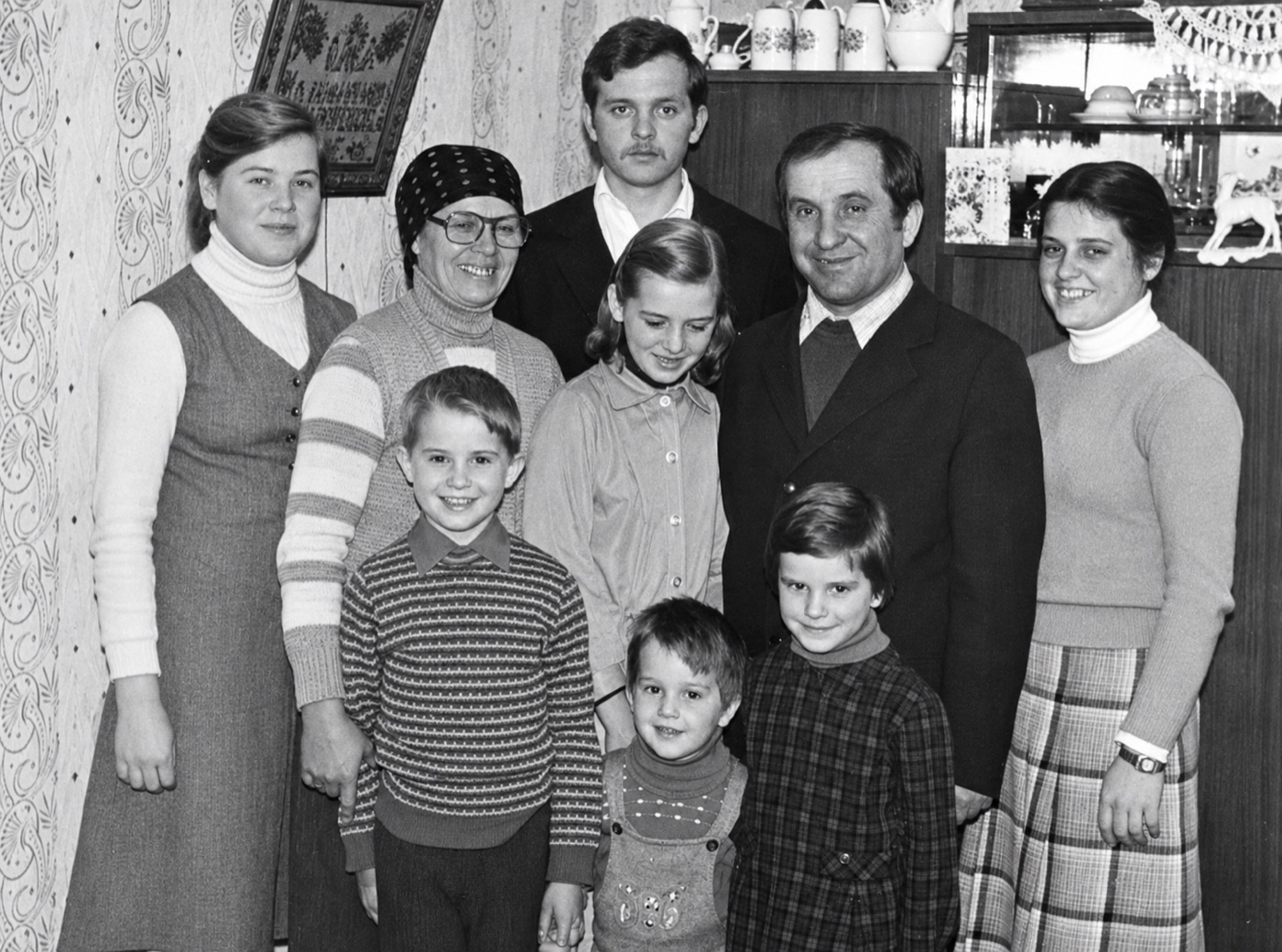
In October 1980, my father was 44, my mother was 41, and there were seven of us children at home, all still minors. The story of his arrest runs through our lives too: my mother’s statement, my oldest brother’s school years, the work of keeping the household going, and the whole family’s journey to America.
Contents · follow the story
My father
My father, Gheorghe Hofman, repaired machines in Rădăuți. He was a Christian according to the Gospel. He was born on 22 March 1936, in Grănicești, the son of Serghie and Victoria. In October 1980 he was 44. My mother, Margareta Hofman, was 41. She was born on 1 June 1939.
Seven children were at home, all of them still minors. The oldest was seventeen and still in high school.
When men came to the house with the sacks, he did not let the children stay in the room. His son writes that on the declaration of 30 October 1980: the talks were not for them, and so he does not know them in full. My mother, on her page from the same day, writes that she was asked, and that she declares. She also writes that she did not see her husband receive foreign money or gold.
The journey of the Bibles
My father counted Vasile Lăcătușu of Cacica as his best friend. That is what I say. On 30 October 1980 my mother writes that the religious books which came in, my father gave to Lăcătușu. They knew him through my father. He came to our house. He spoke at church. This is not Vasile Lăcătuș of Vicovu de Sus. The paper does not call him an informer.
My father told me the road as well. He gave the Bibles to Vasile, and Vasile took them across into Russia. On the same day his younger brother writes that my father told him this: the Russian materials were taken into the Soviet Union through a man named Vasile.
On that line Vasile is a Pentecostal and an excavator operator on a dam built together with the Soviet Union. The town on the line is hard to read, and I do not write it. The line does not write Lăcătușu, and it does not write Cacica. The name, Cacica, and the road into Russia come together in what my father told me.
My older brother, in the letter to his children, calls him David and also calls him Vasile. He writes that he worked on a dam on the Prut, the river at the border, and that he took the Bibles across. My father brought the books as far as the work camp. David took them across. My mother told my father, from what David said, that if he walked around the world in iron shoes he would not find another man who fit him so well. The letter puts him in the work from about 1977. After my father’s arrest, they were looking for him. He left for West Germany and asked for asylum.
The papers in the file do not write David on the same line as Cacica. The letter joins them, and so does what my father told me. The letter also gives a recording of him: his account, in Romanian.
View source: My brother’s letter to his children ↗Family testimony · unchanged original Word file · restricted access.
In that recording, from 2017, David himself says how he met my father. He was an excavator operator at the Stânca Costești dam, in Botoșani, where Romanian and Soviet crews worked together. One night a Soviet driver wept over a Bible in his cabin. From then on he began to carry Scripture across. The same day he went to the station in Vicov de Sus, then to Rădăuți. On Sunday afternoon he walked into the house. They talked that afternoon and all night. On Monday my father said to him, “Come on, Nea Gheorghe.” They made three more sacks and put them in the car of the bakery’s Party secretary. They reached the site safely.
Those three sacks are his memory of that day. They stay apart from the seven sacks on the Suceava night and from the four in the loft at Jalcău.
David says that after that meeting the work grew. The books came into Rădăuți from Sibiu, from Ploiești, and from Bacău. He says my father had contact with Saxon brothers in Sibiu, from whom books arrived out of Germany, and that the missing piece was a man to take them across. That part became his. He names men who hauled the load as far as the site: Toader Mitric, a brother from Siret, kin from Dorohoi. He says they were not supposed to know one another. If someone was caught, the only name was Hoffman. Near Grănicești, at night, they unloaded a full car. Another time my father came in a combi, a blanket and a hat over the books, and he was stopped at Ștefănești. That evening he arrived with the load at a Soviet truck that sat with a wheel off. David says that for almost two years, into 1980, no transport was caught.
When they tried to start the line again, he names Hoffman, Matias, and Paul Gross. The cars were stopped. The men said they were going to Hoffman. Word reached the house: Monday morning at the Suceava militia. Where his recording differs from what we know now is in the next paragraph.
Paul Gross’s handwritten declaration, the page we have, does not reach my father. It stops in 1975. I do not move anything from that sheet onto this story.
In the 2017 recording a few things do not match what we know now. I set them here, in the open. He says Sitarilor 3. The warrant of 26 October 1980 and the search record of 30 October also write Sitarilor 3. My mother, the same day, writes Gărilor 3. The 1981 file writes Sitarilor 4. It is the same house, until a page separates them. The number in his mouth matches the October papers.
He says five children or seven. The court writes seven minors. That is what we keep. He says the station in Vicov de Sus and the works at Stânca Costești. I keep him as Lăcătușu Vasile of Cacica. Vasile Lăcătuș of Vicovu de Sus stays a different man. The papers do not write David on the same line as Cacica. What my father told me joins them, and so does my older brother’s letter.
At the end the film breaks off. He says word reached the house, Monday morning at the Suceava militia, and that my father took the Bibles still in the house. That sentence is hard to follow. The dates we keep are the file’s. The night of 18/19 October does not take him. The long holding begins on 31 October 1980.
The family journal of 23 September 2026, written from his recording, is here as a PDF: What David Lăcătuș said about our father. It is the note for the sisters. The court paper remains the file.
The arrest and the family’s statements
On the night of 18/19 October 1980, at Suceava, a checkpoint stops two cars. In the trunks are seven sacks: 576 Russian Bibles. The reports name the case Canalul-80. They do not take my father that night.
My father tells this night, in his own words. Three minutes. His word confirms what we already hold: two cars, the stop at Suceava, the Bibles, the name Hofman, the day 18 October. Where his date is not the file’s date, I write both. The English on the picture is a working hearing.
He says two Dacias, one man in each, loaded with Bibles. In Suceava they are stopped and searched. The Bibles are found, and the men are arrested. From the questioning it comes out where they were going. He asked. He was told: to Rădăuți, to Hofman. The paper says the same checkpoint: two cars with Alba plates, seven sacks, 576 Russian Bibles. David, in the 2017 recording, also says the men said they were going to Hoffman. My father confirms the sentence. The make is his: Dacia. The Alba plates are the paper’s. The number of Bibles is the paper’s. He says the cars were loaded.
He knew the arrival: a Saturday evening, in October, after the 15th, on the 18th. 18 October 1980 was a Saturday. The day in his mouth and the night on the paper are the same day. He was at work, a mechanic. On Sunday he was to set the boilers, to recover heat. In the morning he saw that they had not come. The agreement was clear. They were not late. He thought they had been caught. This morning is his. The file does not write it.
He told a colleague: if you see Mihalcea, run to the house, gather everything, a search is coming, from the cult affairs. He had just finished, and the man was behind him: “Mr. Hofman, we need to talk.” It was not a talk. He already knew. On the papers, Mihalcea Aurel is the captain, then the major, of the Rădăuți town Securitate, the man who receives the notes. The name meets. The morning in the film is not a note we hold.
The one who asks says that at the trial all five who took part were together. My father says they had an understanding: if they were caught, they would keep to one story. Asked whether he knew Gross Paul, he told that story. It held until the harder confrontations. Gross Paul is one of the five, already in the study. His handwritten declaration, the page we have, still stops in 1975. I move nothing from that sheet onto this page. What my father confirms is the trial, and the name.
He says Monday afternoon, rain. He had worked on Sunday, and Monday he was free. The local policeman called him to the militia. Not here. We go to Suceava. The Monday after Saturday the 18th is 20 October. David also says a Monday, in the morning, at the Suceava militia. The file gives another calendar for the taking. On the night of 18/19 he is not taken. On 26 October there is the five-day warrant, at the Suceava jail. On 28 October the house already says he had been called in for questioning, at Suceava. The long holding begins on 31 October. His date stays his. The date we count stays the file’s. The days sit on the calendar.
A few days later he is alone, away from the house. On 26 October 1980, at three in the afternoon, the prosecutor writes a warrant for five days, at the Suceava militia jail, until 31 October at the same hour. On the photograph, the line where the accused signs that he received the warrant is blank. On 28 October the house already says that a search was made and that my father had been called in for questioning, at Suceava.
View source: The warrant and order · 26 October 1980 ↗Photographs of the documents and a working transcription · restricted access.
On 30 October, while that warrant is still running, the militia takes a declaration from my mother and one from his son of seventeen. She signs her full name, in her own hand, on each page. He signs only his first name.
View source: My mother’s statement · 30 October 1980 ↗Transcription journal based on the archival document · restricted access.
I say they were made to declare. The papers do not write the word “forced.” They write that they were asked, and that they signed. A declaration from that day is not an informer.
The warrant sends him to Suceava. Their declarations are dated 30 October, before those five days end. We do not have a page that says he stood beside them when they signed. The long holding, the one we count, begins on 31 October 1980.
“A declaration from that day is not an informer.”
On the same day the militia is also at his parents’ house, in Jalcău. His mother, Victoria, is 66. She signs that she accepts the search and that the house holds nothing against the law. The search record, written by the organ, finds books, a cassette player and cassettes. Asked where they come from, she says they belong to her younger son.
His younger brother is 29 and lives in that house. He signs that four sacks of Bibles are there, and he gives leave for them to be taken. Then he climbs into the barn loft, moves the hay aside, and brings the sacks out. Asked where they come from, he says in front of the witnesses that his brother, Gheorghe, brought them in the car, to be hidden. On the long declaration he writes that he gives it consciously and that he signs. The road of the Bibles through Vasile is above.
Their house was hit. The words on the page point at my father. I read it this way: they were caught in the middle, and he was still the one left to pay. The younger brother is among the eight who were fined. My father is among the five who were imprisoned.
The paper does not prove that the brother wanted to give him up. The militia was already in the house. A declaration from that day is not an informer. The brother’s name stays in the study.
The working transcription joins the two counts into one year and six months. The prison was at Botoșani. The certified copy is not yet in the house.
My brother, between school and interrogations
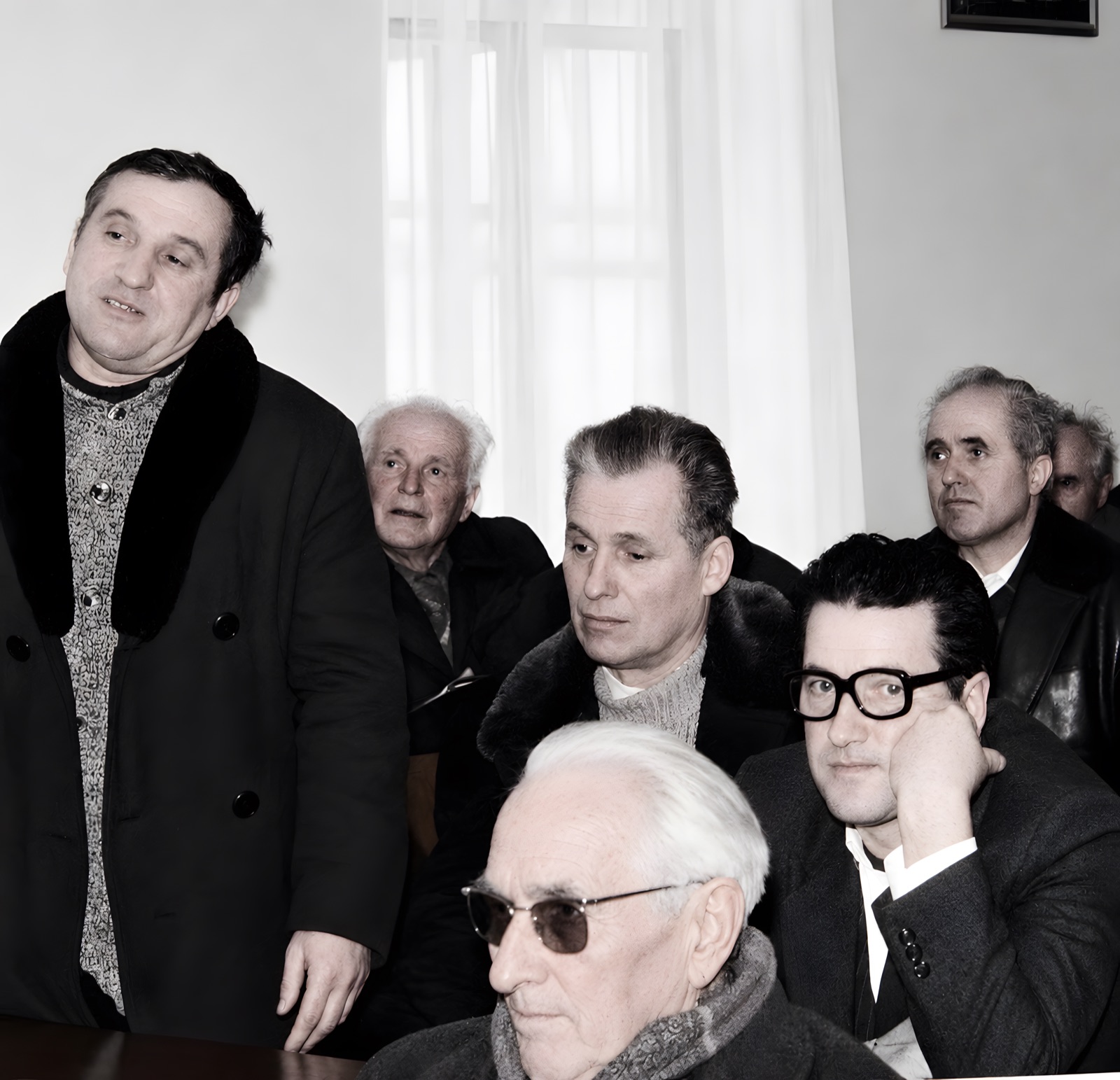
My older brother wrote, later, to his children, what those months were for him. While my father was still being questioned, they took him out of school for interrogations. The teachers and his classmates stayed away from him. They told him, more than once, that his life was over.
He wanted to leave school. He finished it anyway. As soon as he finished high school, my mother asked him to leave town and find work far away.
That is his letter, not a Securitate paper. I do not put his name here.
View source: My brother’s letter to his children ↗Family testimony · unchanged original Word file · restricted access. Source comparison: the letter dates the conviction to 30 November 1980; the working transcription cited in the Romanian version of this story gives sentence no. 13 of 10 January 1981. This difference remains unresolved pending verification against the certified copy. The letter is preserved without corrections.
“He wanted to leave school. He finished it anyway.”
Work, bees, and continued surveillance
A report of 11 September 1981 writes that, shortly after he came home, he spoke at the Pentecostal assembly in Rădăuți. He thanked them for the help given to the family while he was in prison, and he said that God would continue the work. The report is not the date of the photograph. The release ticket is not in the house.
After prison he went back to work and to the bees. Life was not a new page. On 5 December 1983 a note writes that they talked about leaving the country: no approval yet. He had received another parcel from abroad. His son had come home from the army and was at home. My father tells it himself, at the leaving. In January 1984 a note finds him at the garage: withdrawn, and he does not join the talk. He had replaced the car engine with a diesel. In summer he took the hives out, one year toward Galați, and the note asks that the place be found.
On 1 February 1984 he was at the Baptist church service. The month before he had meant to go to Sibiu by car with his son. Near Fălticeni a car coming the other way hit him, and his car was destroyed.
I say my older brother was at the wheel. The note does not write who was driving. It writes that the car was my father’s and that his son was with him.
The file did not close when he came out. The notes about these days carry cover names. I do not put them here, and I do not make them into people. A cover name on a note is not, by itself, proof that the person on the street was recruited. The notes go into his file, and the officer writes that he is being worked.
The group action BIBLIA is closed on 5 December 1985. The page writes that the materials are no longer of operational interest and that the file is handed to the archive. That closing is not an acquittal. In 1987 the paper still calls him the principal author. In 1988 the house is checked again. From the coming home, in 1981, until the train to Italy, the papers did not let him go.
My older brother writes that, after prison, the bakery would not take him back to work. He was a mechanic there. To keep the house, he kept bees. Sugar was rationed. People bought honey. He was away most of the year, and so it was hard to know where he was.
That is his letter. The notes tell the days. The honey came from those hives. On 6 May 1983 a note writes, from what my mother said, that he is getting ready to take the hives around the country and that after the holidays he goes to Galați County, where he had been in other years too. The task on the note is to find the place and to tell the organ.
On 6 July 1983 a note writes that he came back quickly from Galați: the drought had left no blossom for the bees. Then he left toward Vatra Dornei, and the note does not know the place. On 20 December 1984, after the accident, he stays home more and gets ready again to leave with the bees. The person writing says he watched the house and did not see strangers from the town.
Three more notes. In the summer of 1984 the person writing finds only my mother at home. My father was away with the hives at a linden wood near Galați. The place on the line is not read for certain, and I do not put it. My mother asked him to help a son get a job. The son is not named.
A half-covered note, the date read uncertainly as 12 July 1984, writes that he receives something from abroad. The word may be “money,” and I do not close it. At that time he is not employed. The line about his son cannot be read. Lately he had not been seen visited by people from the town.
On 6 September 1984 he told someone, at his younger brother’s, that he wants to move with the whole family to Reșița or nearby. If he finds a good job, he sells the house here and buys another. He had come back from the bees, from Galați, and he was at home. The name of the person writing is not read.
He was a Christian according to the Gospel. The notes follow him into other churches too. On 11 September 1981 he is at the Pentecostal assembly in Rădăuți. On 1 February 1984 he is at the Baptist church in the town. On 13 September 1984 he is at the Baptist congregation in Vicovu de Sus, where two American tourists, Baptists, were expected. The note writes that he was asked what he had settled about the family’s leaving for West Germany. He said nothing for now, because he had no approval. He patted the pockets of his coat and said he had prepared something. The note reads that as a letter for the tourists. The application on file, on the 1987 papers, remains for the United States. On 6 April 1984 he and his younger brother talk, in Rădăuți, about the meeting house of the Christians according to the Gospel. They want to build a new one, because the present one might be demolished. They are few. Each would give 400 lei every two months. They have started gathering materials and will ask the People’s Council for land. Another note, whose date is not read, writes that the assembly wants to buy a house on 1 Mai Street, to make it a meeting house, in the name of an elderly woman. The name on the line is not read for certain, and I do not put it. The notes do not write that the house was bought. They write the plan, and that the plan is being followed.
My father tells the day of the trial, in his own words. The courthouse yard in Rădăuți, after the judgment. The people are outside, and they sing.
If you want the papers
The CNSAS study, drawing on the Securitate reports, says that in Canalul-80 five people were imprisoned and eight others were fined. My father is one of the five. The names of the eight stay in the study. On the cover of the surveillance file is the cover name EVANGHELISTUL. It is the name put on the man under watch. It is not an informer’s name.
The state did not write “Bible smuggling.” The working transcription gives two counts: 170 rubles in August 1978, and printed matter without authorization, from 1971 to 1980. The two penalties were merged into one year and six months. On the transcription, the trial is at Rădăuți, sentence no. 13 of 10 January 1981. The appeal, at the Suceava Tribunal, 31 January 1981, was rejected. The prison was at Botoșani. The certified copy is not yet in the house. We are asking CNSAS for it, file P 2551/2026.
The 10,600 marks in the study are the money of West Germany, taken from the five. At the 1999 rate they are 5,419.69 euro: 1 euro = 1.95583 marks. The other currencies each stay on their own row. There is no single total.
The warrant of 26 October writes 15:00. The declarations of 30 October, from his wife, from his son, from his mother and from his younger brother, and the warrant, are working transcriptions, from the photographs in the house. They are not the certified copy. The four sacks in the barn are not added on top of the 2,719 Bibles.
Our story
On the papers in the file, on 8 April 1987 the papers to emigrate to the United States are already filed, for the whole family. On the same page he is still “worked” and still called the principal author of the Canalul-80 case.
On 16 June 1988 the house is checked again for emigration. The page writes that he remains “in the concerns of our organs for relations with sectarian elements abroad.” The word “sectarian” is theirs. The opinion on the page is positive. The papers do not write the day we received the Romanian passport, and they do not write why it took so long.
The places, as they stand on the papers, are these. The application to emigrate is for the United States. A note, whose date is not read, writes that he said he does not give up leaving for there, that he has taken the steps, and that if it does not suit him he comes back.
Italy is the stop on the way, not an application. West Germany is where the Bibles came from, not a second application. The Soviet Union is where he said the materials were taken across, not a country he asked to move to.
My brother’s departure and separation
The leaving was hard inside the house too. The papers are not for him alone. They are for the whole family. At the same time the file still holds him, and still calls him the principal author.
My mother and my older brother pressed him, as far as I know. My older brother says our father told him: “If you do not come now, no one comes.” That sentence is not on a Securitate paper. He is the one who says it.
This was my father’s position. The state still would not close his file. The papers to leave belonged to the whole house. The people closest to him were pushing. To get them out, he put everyone’s leaving on the son who could stay. He was not a man choosing one child against the others. He was a man who could not move the house if that son did not move.
Later, my older brother wrote this to his children. He writes that he was in love then. The girl was not yet in the family, and she was not on the visa. They got engaged the night before we left Romania. He had told our father to leave, and that he would come later, once the engagement was settled. Our father put the choice to him: if he does not come, no one comes.
He was the oldest. He was 26, and he knew enough English to be the support our father saw in the new country. He writes that he did not have a real choice. He came with the family. It took about four years until he was reunited with her in America.
That is his letter to his children, not a Securitate paper. I do not put her name here.
View source: My brother’s letter to his children ↗Family testimony about departure and separation · unchanged original Word file · restricted access.
The journey to America
We did receive the Romanian passport, at last. From Romania to Italy we went by train. How long the exit took, we are still searching.
In Italy we stayed until we could go on. We called it a lagăr, a camp. This page does not name the camp. A Catholic organization paid for the plane ticket. We paid the same sum back, with no interest. I do not put the office’s name here.
If you want the camp and the ticket
For Romanians leaving toward the West, the best-known camp was at Latina, south of Rome, open from 1957 until 1989. Reti Solidali writes that people left from there for other countries, among them the United States. A Romanian account gives about 6,000 Romanians through Latina. I do not write that my family stayed in that one.
The public program that matches the account of the ticket is written by the International Organization for Migration: since 1960 it has given an interest-free loan for the journey, and the person signs the promissory note before leaving. When the agency that receives the family is the Catholic one, the payment goes to the United States Conference of Catholic Bishops. On their page from 2015, the ticket is bought by IOM, with money from the State Department, and the loan carries no interest.
My father tells why he decided to leave, in his own words. My older brother was in the army, with the mountain troops. They moved him from the unit. In August 1989, before the revolution, they left.
He gives the month they left: August 1989, before the revolution. The line below is the arrival, and it is mine.
On 23 August 1989 we reached Buffalo, New York. The date is mine. It is not on the Securitate papers. The sponsor, also from my account, was the Evangelical Pentecostal church in Depew, New York.
For those who come after us
I am Daniel Silviu Hofman, his son. I opened this archive so that a student can read the pages, with the date and with the paper in hand. The evidence opens below. The family files ask for the password.
The place for my sons, for my brothers and sisters, and for anyone who asks is written on the first page. Anyone who studies the file under proper conditions writes to daniel@hofmanfund.org.
Where the evidence is
A line in this story is either the paper, or what my father told me, or my older brother’s letter. The button opens the paper. It asks for a name and a password. The password is not written on this page. The family has it. If you do not have it, stay with the open pages, or write to daniel@hofmanfund.org.
The map of the searches is already interactive. Press a house, and the door asks for the password for that house’s page. Open the map.
Open to anyone, with no password:
My father, three minutes The day of the trial Why he left The calendar The sources The map of the country How the file worked Department D David’s journal David’s recording
Read on
The archive The sources The searches The calendar The evidence