Hofman Fund · Suceava
Ioan Clipa
Presbyter of the Christian church according to the Gospel in Suceava. A friend of my family. Each sentence below keeps its author.
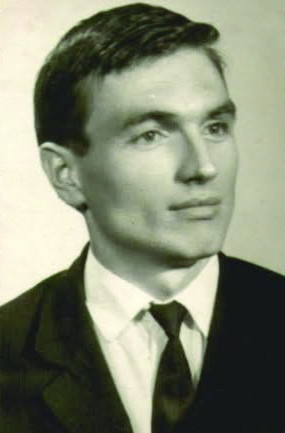
What I say
My father, Gheorghe Hofman, had him as a family friend. I say that. I do not take it from a book, and I do not put it on my father’s map.
The son’s panel
The son, Florentin Clipa, sent the panel BIBLIA ÎN ROMÂNIA COMUNISTĂ. The words and the photographs there are his. Here is part 6, in short. The whole text stays on the panel.
Through Vasile Răscol of Pătrăuți, who had worked with Vladimir Caravan, he writes, Ioan Clipa entered a network that carried Bibles. From 1968 he took Bibles and New Testaments on visits to the USSR and to Poland, with his wife, Teodora. He also sent packages by the chief of the trains that passed through Suceava toward the USSR. At a set hour and place, he writes, the chief threw the package from the window, and another colporteur took it. The panel does not name the train chief. It has no photograph of Teodora.
He also writes that someone told the security police and that Clipa went onto their black list, that in December 1972 he was arrested and his house was searched, and that not long after he lost his job. Then, still on the panel: house arrest, interrogations, beatings, long stays in hospital. The month the panel sets beside the end is November 1980. The sentence is his. I do not add one.
The December 1972 arrest on the panel is not the same sentence as the store of 889 printed pieces and the exposure in Zori noi on 12 December 1972 in the book. Nor is it the 17 days of 1975, nor the attempt at Autobaza I on 20 November 1976 in the 2012 note. I do not join them.
The 1981 report
The summary is on Truths Which Cannot be Hidden. The full text is in Religion in Communist Lands, vol. 10, no. 2, 1982, pp. 220–221, the document “Truths Which Cannot be Hidden,” written by the Romanian Christian Committee for the Defence of Believers’ Rights and reprinted at Keston College. The scan is at Theology on the Web, by permission of the Keston Institute trustees. Hofman Fund does not upload the PDF.
The committee prints Ioan Clipa at 20 Alexandru cel Bun Street, Suceava. That is the address in the report, not a later address. I do not put the telephone number from the journal here. It writes that in the autumn of 1980 he was interrogated because he had distributed Bibles, that the security police tortured him until his mind was destroyed, and that he then had nervous crises. At the beginning of 1981, the committee writes, the police came again to the house and arrested him. It also writes that he had not forgotten the torture of the autumn of 1980, that he had heard of the interrogations and tortures of his friends in Botoșani, and that he knew what he too could face. The committee does not name them. I do not name them.
In the journal’s English the committee writes that he had a breakdown, went into hiding, and committed suicide. It also writes that the Romanian police are directly responsible for his death, and that in the autumn of 1980 they had already killed him by destroying his mind. The wife, on that page, is Eugenia Clipa, an invalid pensioner, with seven young children. That is the committee’s sentence. I do not add one.
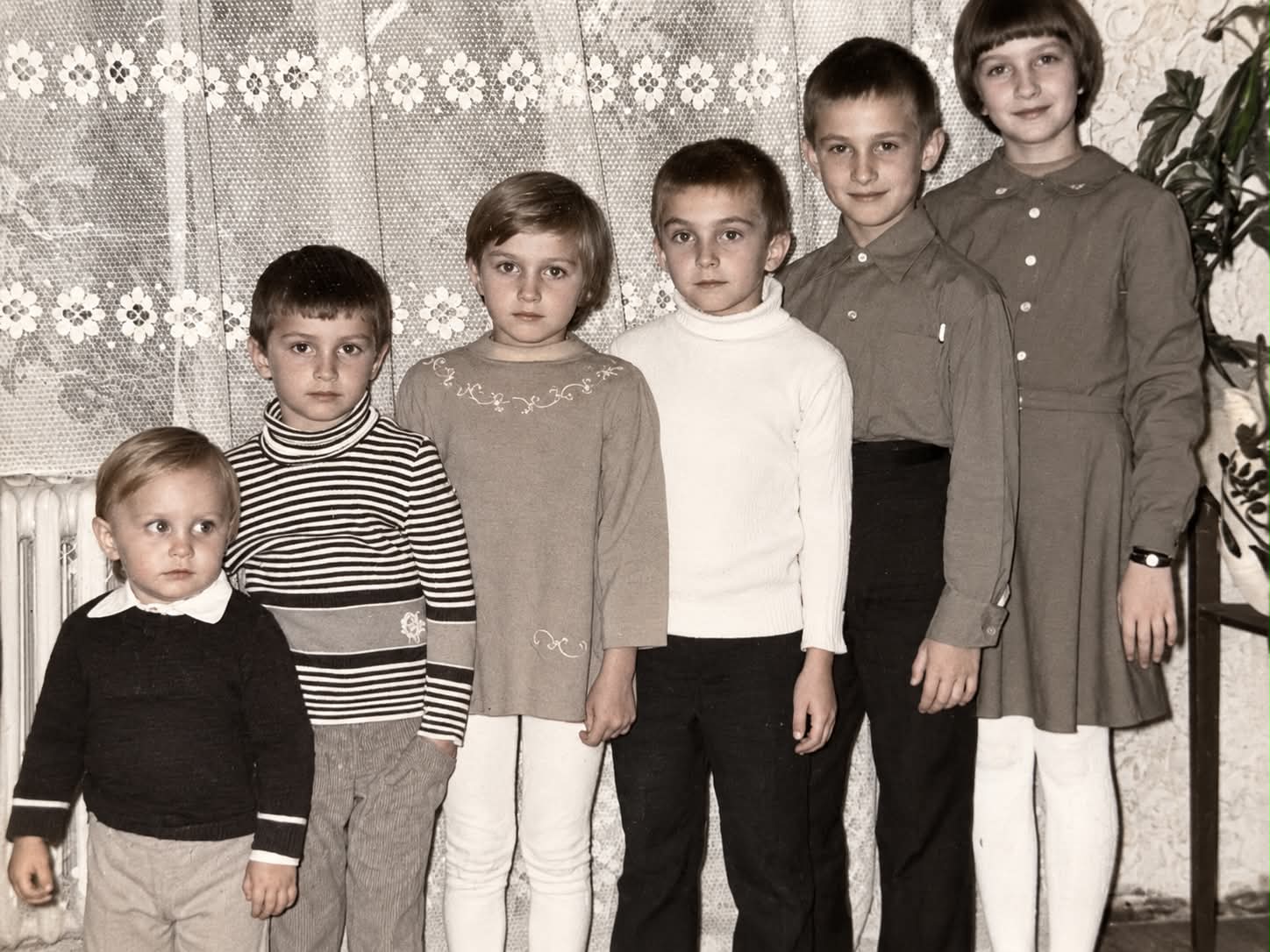
The panel names the wife Teodora and sets November 1980 beside the end. The 2012 note calls the end a mystery and gives no wife’s name. The 2018 book writes that he was found hanged in front of his brothers’ garage. The photograph from the house shows six faces, with no names. I do not choose. I do not set one number over the other. I do not join them.
Dorin Dobrincu, 2012
Dorin Dobrincu, “Cultele neoprotestante şi drepturile omului în România.” Un memoriu din 1977 [The neo-Protestant denominations and human rights in Romania. A 1977 memorandum], Archiva Moldaviae, vol. IV, Iași, 2012, pp. 351–402, here p. 398.
In the note he calls him principal presbyter of the Christian church according to the Gospel in Suceava and sets the years 1938–1980 beside the name. He writes that Clipa was forced to leave the roads enterprise in Suceava, where he had worked as a vehicle foreman, and that on 20 November 1976 he tried to be hired at Autobaza I in Suceava. He writes of an arrest in 1975 and of 17 days of questioning, citing Sergiu Grossu. He writes of an arrest in 1980, for a Bible network, and of a beating. Of the end he writes that it is a mystery and that the political police was not foreign to it. He thanks Florentin Clipa for the information.
The sentence about the end is Dorin Dobrincu’s. I do not add one. The note gives no wife’s name. The journal keeps its PDF. The credit is here.
The book, 2018
Dorin Dobrincu, “Sub puterea Cezarului” [Under the power of Caesar], in Omul evanghelic. O explorare a comunităților protestante românești, edited with Dănuț Mănăstireanu, Polirom, Iași, 2018, p. 207.
There Ioan Clipa is a Christian according to the Gospel and principal presbyter of the church in Suceava, in a network of Christian literature. In 1972, he writes, a store of 889 printed pieces was found at Clipa’s home. An exposure followed in Zori noi, year XXVII, no. 7768, 12 December 1972. The paper answered both to the Suceava PCR committee and to the county people’s council.
Arrested in 1975, he writes, Clipa was questioned for 17 days and beaten. Held again in the autumn of 1980, among the arrests for Bibles, he was tortured by the Securitate. At the beginning of 1981 the securitate men came to his door again. Dobrincu writes that, remembering what he had endured, Clipa had a crisis and fled, and that a short time later he was found hanged in front of his brothers’ garage. The sentence is Dobrincu’s. I do not add one. The note points to Sergiu Grossu, Calvarul României Creștine, 1992, pp. 196–202, and to the 2012 article.
The book puts the beating with the 1975 arrest and the torture with the holding in the autumn of 1980. The 2012 note says it differently and calls the end a mystery. The report reprinted by Keston, pp. 220–221, says it differently again. The panel sets November 1980. I do not join them. The whole chapter stays in the book. Hofman Fund does not upload the PDF.
I have not had Sergiu Grossu’s pages 196–202 in hand. I did not find them open on the internet. What reaches this page from them passes only through Dobrincu’s citation.
In the same chapter, at p. 217, Petru Clipa of Suceava stands in a list of ends that Dobrincu calls suspicious. He is not Ioan Clipa. He is not Florentin Clipa.